Coffee grounds are compost material. Caffeine is the active research question.
Coffee advice spreads because it is cheap, familiar, and feels safer than pesticides. The problem is that most advice blurs the difference between used coffee grounds, brewed coffee, and measured caffeine solutions. Those are not the same thing.
The useful science
USDA ARS reported caffeine acting as both a repellent and toxicant against slugs and snails, with stronger solutions killing and lower concentrations reducing feeding in tests. That does not prove that a handful of spent grounds around lettuce contains enough caffeine or lasts through rain.
The practical uncertainty is concentration. Used grounds have already given up much of their soluble caffeine. Rain, soil, microbial activity, and uneven application change the dose even more. A gardener cannot look at a brown ring and know whether it is biologically active.
What to do in the bed
Use coffee grounds as compost inputs if they fit your soil routine. If experimenting with coffee liquids, test a small non-critical area and watch plant response. For valuable seedlings, rely on visible controls: shelter removal, water timing, barriers, and scouting.
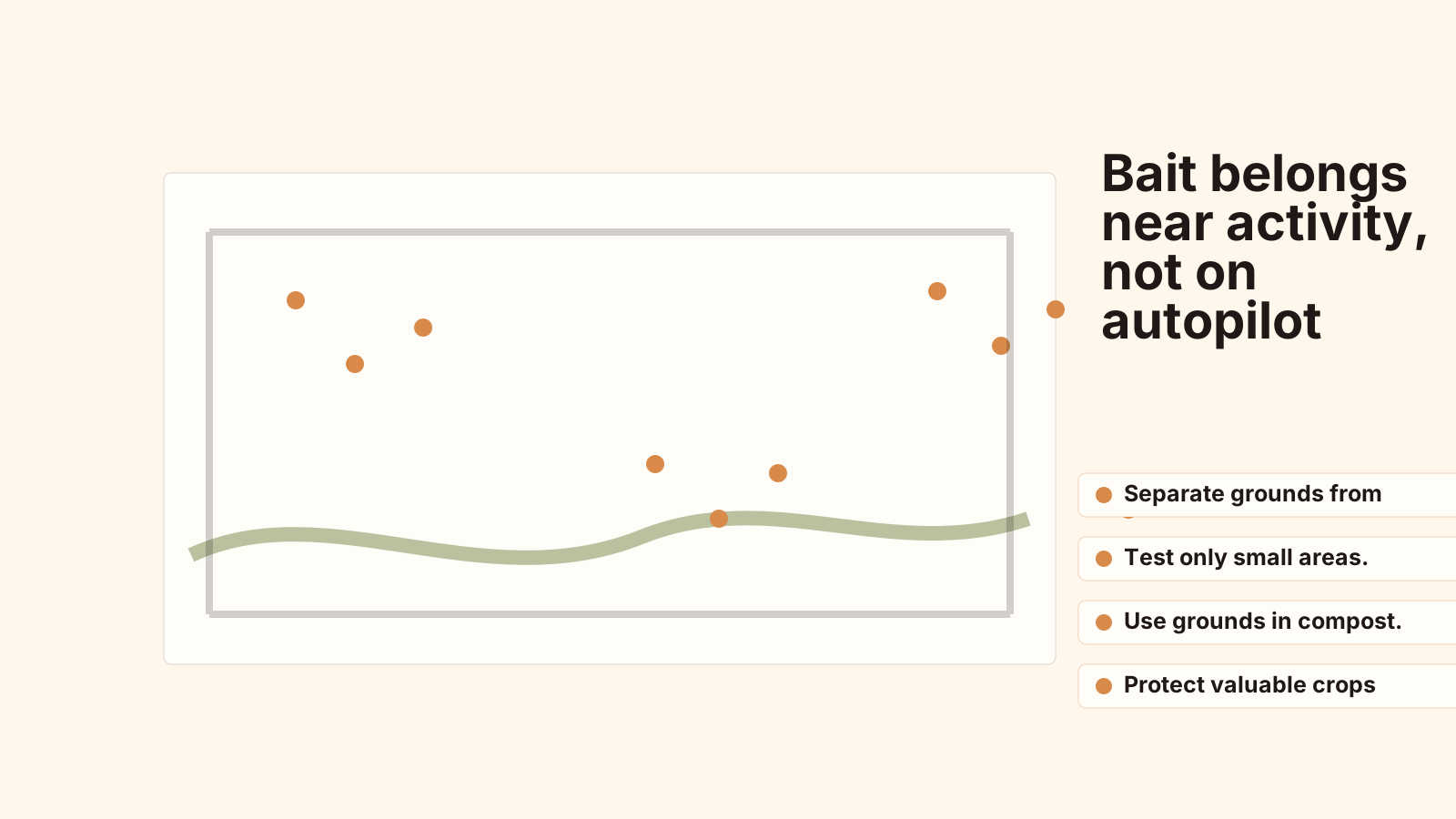
- Separate grounds from caffeine.
- Test only small areas.
- Use grounds in compost.
- Protect valuable crops visibly.
A realistic garden scenario
Imagine this article's problem showing up in a small mixed bed rather than a clean demonstration tray. The bed edge is uneven, one side stays damp longer than the other, and the crop is worth protecting because replacement plants cost time. In that setting, coffee grounds for slugs is not judged by whether the idea sounds clever. It is judged by whether the crop zone is easier to inspect, whether the weak points are obvious, and whether the method still makes sense after irrigation, wind, and one careless evening.
The first pass should be physical and specific. Put your hand on the objects that might hide moisture. Lift the closest pot. Look under the leaf that touches the soil. Check the route from the shelter to the plant, not just the plant itself. For this topic, the practical priorities are: separate grounds from caffeine.; test only small areas.; use grounds in compost.; protect valuable crops visibly.. Those priorities make the advice measurable instead of vague.
Failure points to watch
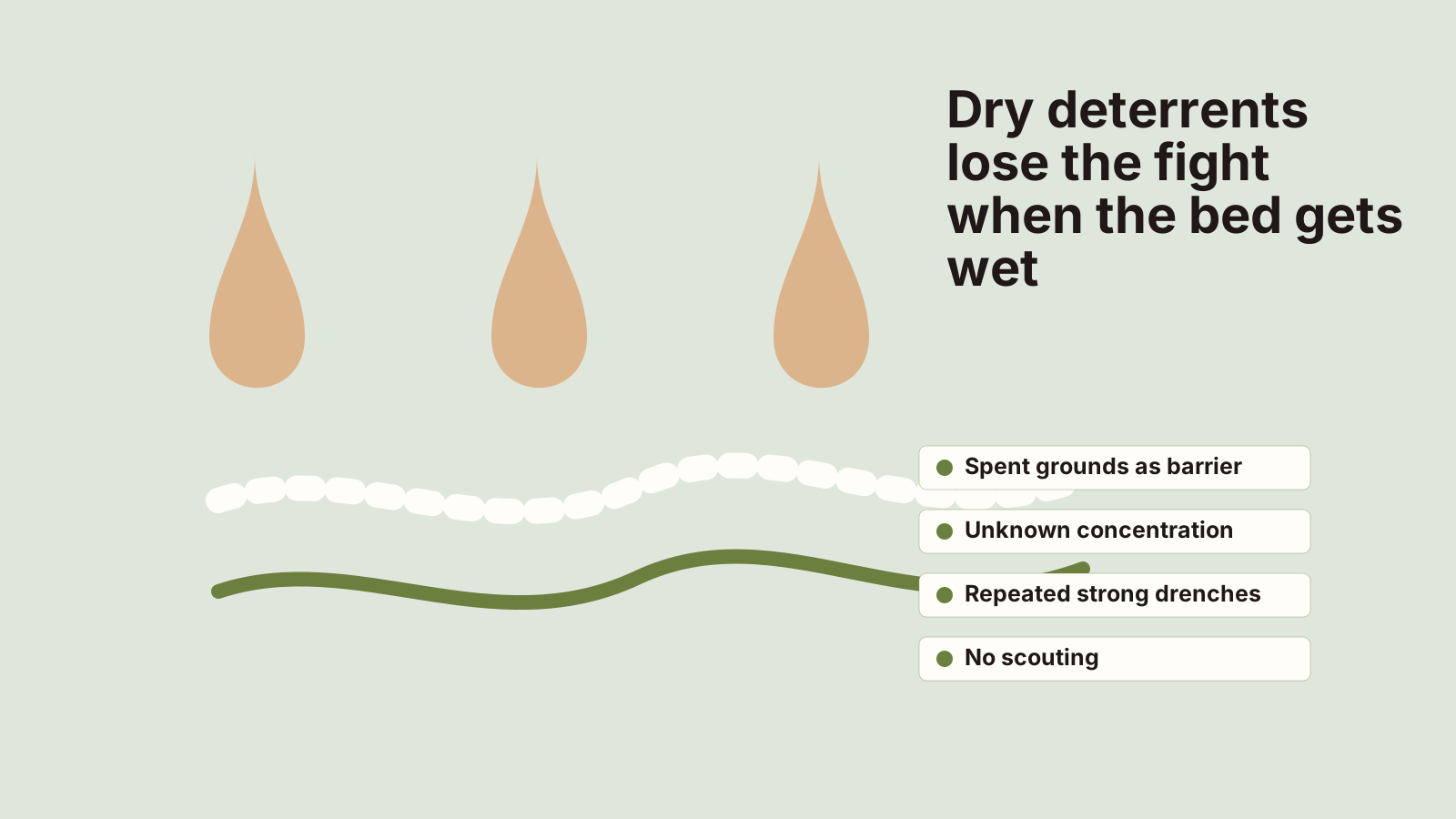
Do not replace protection with a folklore ring. Do not pour strong coffee repeatedly into beds without considering other soil life. Do not confuse a research result with a labeled pesticide recommendation. Curiosity is fine; dependency is risky.
- Spent grounds as barrier
- Unknown concentration
- Repeated strong drenches
- No scouting
How to audit the next morning
The next morning audit for coffee grounds for slugs is where this advice separates itself from decoration. Do not ask only whether the bed looks tidy. Ask whether there is fresh slime outside the protected area, whether the damaged plant has new feeding, whether the perimeter is still visible, and whether the specific weak point described in this Myth Testing guide appeared overnight. If the answer is unclear, repeat the night scouting before changing products.
Keep a short note for the bed: weather, watering time, where damage appeared, where pests were found, and what changed. Over a few nights, the pattern becomes more useful than any single catch or single bite mark. The recurring failure points for this article are spent grounds as barrier; unknown concentration; repeated strong drenches; no scouting. If one of those shows up twice, fix that condition before adding another control layer.
How it combines with Slug Defense
For coffee grounds for slugs, Slug Defense fits best as the visible perimeter layer. It does not replace the surrounding work this article calls for, but it makes the protected zone obvious and harder to cross while the other controls reduce pressure around it. That distinction matters in myth testing because many slug tactics fail when they are asked to be everything at once.
For coffee grounds for slugs, the strongest setup is usually a layered one: clean the inside, define the perimeter, scout the outside, then adjust the wet or sheltered spots that keep producing traffic. If the barrier is working, you should be able to explain what it protects and where a slug would have to cross. If you cannot explain the line, the garden cannot enforce it.
Bottom line
Caffeine research is interesting. Used coffee grounds are not a dependable slug barrier.
Use the article's main keyword, coffee grounds for slugs, as a starting point rather than a one-step answer. Slug prevention improves when the method is visible, repeatable, and easy to inspect the next morning. That is why the strongest plans combine observation, water timing, shelter reduction, perimeter protection, and a clear response after wet weather.